Visual reference
Microexpressions chart
Seven patterns, side by side with a neutral face. Look for the change—not just the label.


01 / Cheeks & mouth
Happiness
- The corners of the mouth rise.
- The cheeks lift; the eyes may narrow.
- Small creases may appear beside the eyes.
What can look similar?
Compare with contempt: happiness usually lifts both mouth corners, while contempt emphasizes one side.
Study the happiness example
02 / Inner brows & lips
Sadness
- The inner ends of the brows rise and draw together.
- The lip corners may turn downward.
- The lower lip may push slightly forward.
What can look similar?
Do not rely on a downturned mouth alone. Observe the inner brows and compare with the neutral face.
Study the sadness example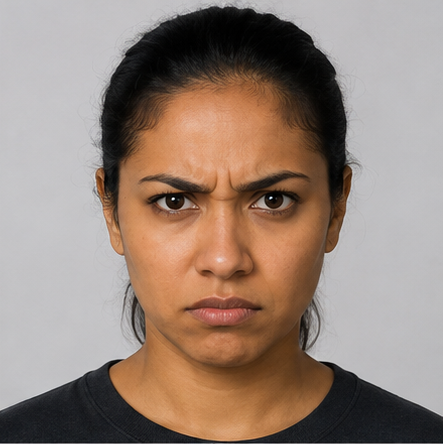
03 / Brows & eyelids
Anger
- The brows lower and draw toward each other.
- The eyelids tighten.
- The lips may press together or tense.
What can look similar?
Compare with disgust: anger emphasizes lowered brows and tense eyelids; disgust emphasizes the nose and upper lip.
Study the anger example
04 / Brows, eyes & mouth
Fear
- The brows lift and draw toward each other.
- The upper eyelids rise while the lower lids tense.
- The mouth may stretch sideways.
What can look similar?
Surprise also has wide eyes. In these examples, fear has more brow tension and a sideways mouth stretch.
Study the fear example
05 / Brows & jaw
Surprise
- The eyebrows lift into a curve.
- The eyes open wider.
- The jaw may drop, creating a relaxed mouth opening.
What can look similar?
Fear can look similar. Here, surprise has a rounder mouth and less tension between the brows.
Study the surprise example
06 / Nose & upper lip
Disgust
- The nose may wrinkle.
- The upper lip rises.
- The cheeks lift and the eyes may narrow.
What can look similar?
Anger often emphasizes lowered brows. In this example, disgust is most visible around the nose and upper lip.
Study the disgust example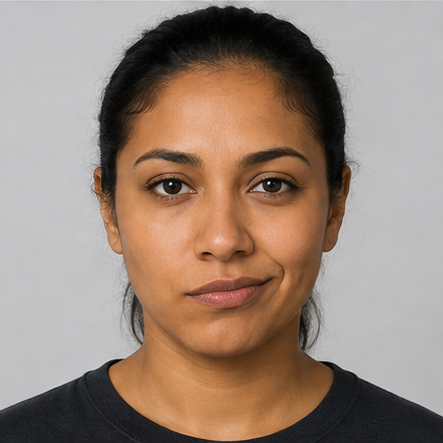
07 / One mouth corner
Contempt
- One mouth corner tightens and lifts.
- The movement is stronger on one side.
- The eyes and brows may change very little.
What can look similar?
Compare with happiness, where both mouth corners typically lift. Here, the one-sided movement is the distinction.
Study the contempt exampleTurn the chart into a short exercise
- Choose two patterns that look similar and compare the same person’s face.
- Cover the expression names. Describe one visible change in your own words.
- Reveal the labels, then change the example face. Look for the same cue again.
A still chart helps you learn the shapes. A microexpression adds the challenge of time. See the brief-versus-longer expression demonstration, then try timed practice.
Expression references: Paul Ekman Group’s emotion guides. About these learning examples.
Learn Microexpressions · learnmicroexpressions.com/microexpressions-chart